
Introduction
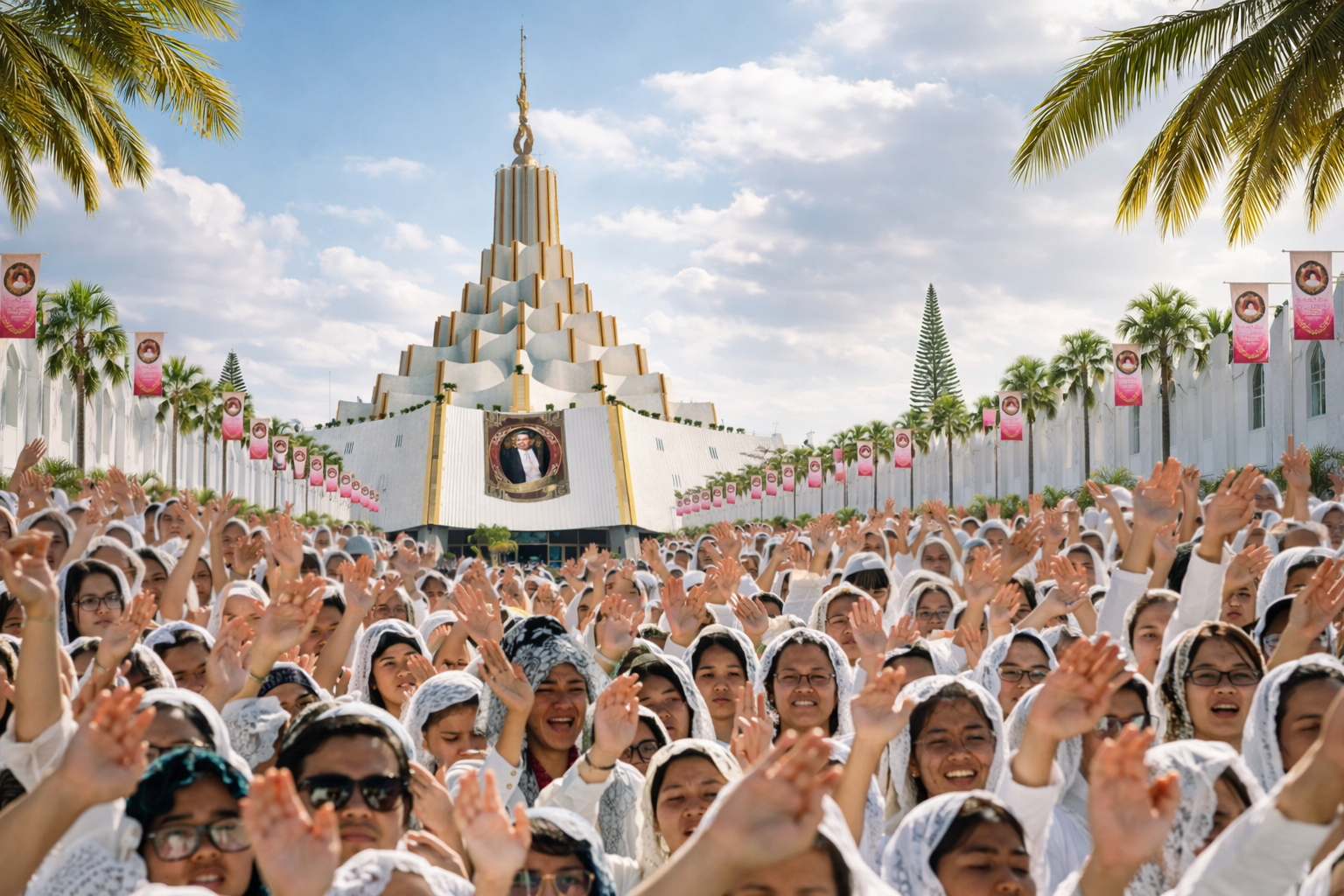
This blog post seeks to examine an elusive cult, a dangerous cult, one whose tangled web has left in its wake thousands of victims. Honestly, when scouring the internet, you can find almost no information; not to mention that what information you do find is all in Spanish. Still, the information is few and far between. This perhaps is the first article in English that is determined to expose the La Luz Del Mundo cult through a historical and theological examination. Now what is interesting about La Luz Del Mundo is that there are two accounts of how LLDM began. Like William Branham and the Branhamites, there is the cult history meant to influence all those within the cult. It is the official story approved by the “church,” but with closer scrutiny we find that this history, with bits and pieces of truth, does not give a clear picture of its founding.
We must understand that most cults rely on the claims of their own history, for embedded within their claims are sprinkles of apostolic authority by way of direct revelations from God, many of which they claim separate the founders or, in other words, make them holy and distinct from the world.
What do the Scriptures say? God has declared the end from the beginning; prove all things, hold fast to that which is true (Isaiah 46:10; 1 Thessalonians 5:21). Any claim of history from any organization whose claim is to hold apostolic authority by way of direct revelation of God ought to withstand scrutiny; is not God the Author of history?
Like Elijah on Mount Carmel, through direct revelation of the LORD, we must stand up to the false prophets and proclaim: ask of your god about the past and tell me why it happened. If they are wrong, the truth is not within them and their gods are false. Let us aim our sights and direct our focus into the past, first examining the “official teaching” of the history of La Luz Del Mundo, and then unmask the facade and present the truth.
The Official Teaching
The official teaching of La Luz del Mundo (LLDM) church doctrine starts with the calling of its first apostle, founder Eusebio Joaquín González. LLDM teaches that this is a divine event that occurred on April 6, 1926. which marks the beginning of the restoration of the true church of god on earth.
Please understand that followers of LLDM believe in Restoration principles—meaning that the fullness of the revelation of God was lost after the first Apostles; that the primitive Christian church on Earth had become corrupted; and that the truth fell away until Eusebio was called by God to restore the true teachings of the primitive church.
The Calling of the First Apostle
The Vision: Eusebio Joaquín González, a former soldier in the Mexican army, claimed that at dawn on April 6, 1926, he heard the voice of God call to him.
The New Name: God told him, "Here is a man whose name will be Aarón". Overwhelmed, he woke his wife, who reportedly heard nothing. He went back to sleep and the vision repeated, with a brilliant, thundering celestial vision showing a hand pointing at him and declaring, "Your name will be Aarón, and your blessed name will be known and famous throughout the world".
The Mission: Driven by this vision, Eusebio changed his name to Aarón and took on the mission of restoring the true Christian Church. LLDM doctrine teaches that God directly chose and sent him to "preach the will of God and Salvation" in the modern era.
Establishment of the Church
Aarón Joaquín González began preaching, eventually finding success in Guadalajara, Jalisco, Mexico, where he founded the first temple in the mid-1930s. He consolidated his power as the "Apostle of God on Earth," and the church's theology centered around his absolute authority as the one and only living connection to God.
Upon the death of Aarón Joaquín González the church has since been led by a succession of leaders from the same family, who followers believe were also divinely appointed:
Aarón Joaquín González (founder)
Samuel Joaquín Flores (his son, who took over after Aarón's death in 1964)
Naasón Joaquín García (Samuel's son and the current leader, despite being in prison for sex abuse convictions)
The belief in the "living apostle" as the sole intermediary to God is a cornerstone of LLDM faith, demanding unquestioning obedience and devotion from its members.
The True History
Mark Twain said it best: “Truth is stranger than fiction, but it is because Fiction is obliged to stick to possibilities; Truth isn’t.” With respect to LLDM, we find this quote to ring true; God’s declaration is not bound to the interpretations of man, nor can man’s reinvention of history rewrite the past. Thus is the case for LLDM; the facts that are going to be presented are like a joker in a deck of cards. At first it seems out of place or without rhyme or reason, but upon closer inspection, the one who crafted the cards intentionally placed him there, lurking in the background like a fingerprint of design that stamps the facts and cannot be avoided.
1913 — Arroyo Seco: The Birthplace of the “Jesus-Name” Movement
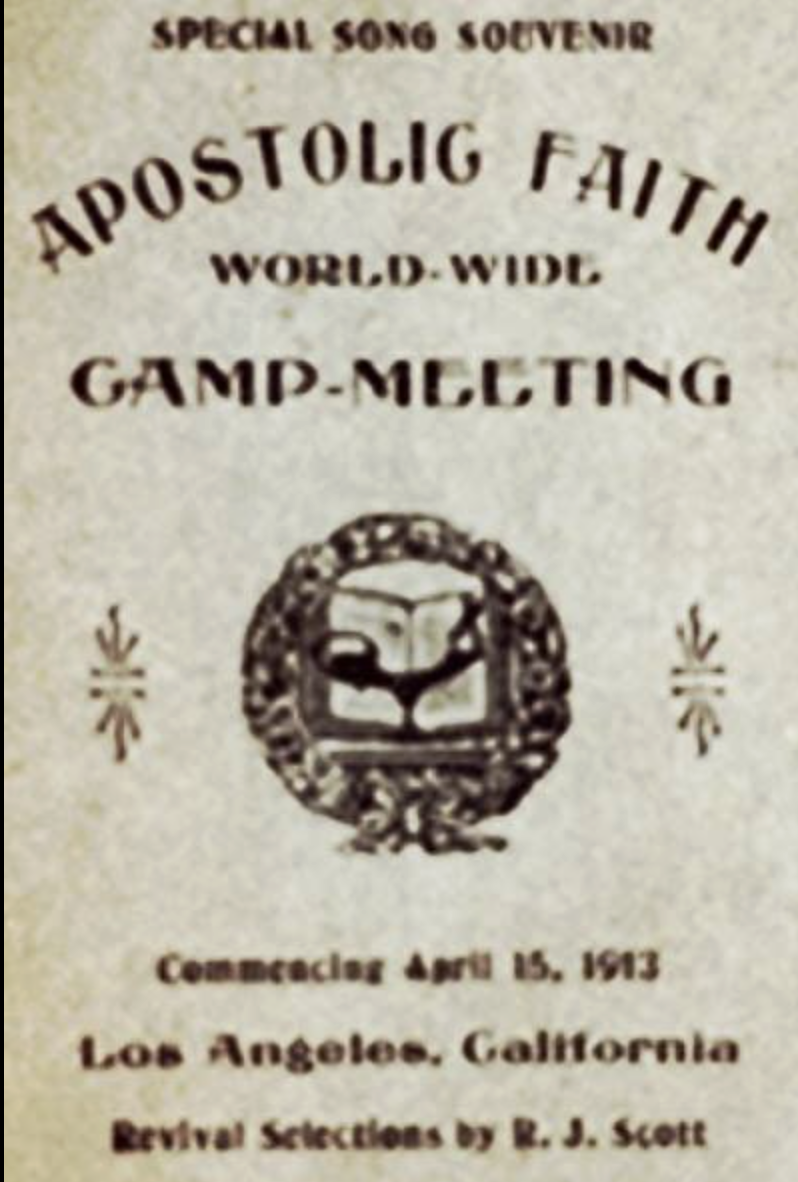
In April 1913, at the Arroyo Seco Camp Meeting near Los Angeles, a gathering of about 5,000 Pentecostals took place. There, a Canadian preacher, R.E. McAlister, taught that Christian baptism should be done only “in the name of Jesus,” rather than using the Trinitarian formula. That night a young man named John G. Schaepe ran through the camp claiming that God gave him a revelation pertaining to baptism in the name of Jesus. What that exact revelation was is not documented. Later, Oneness advocates indicate that this revelation was actually that “The name of the Father, Son, and Holy Spirit is in fact Jesus.”
This was the seed of what later became the Oneness Pentecostal or Unitarian movement:
Rejection of the Trinity
Denial of the eternal personhood of the Son
Baptizing only “in the name of Jesus”
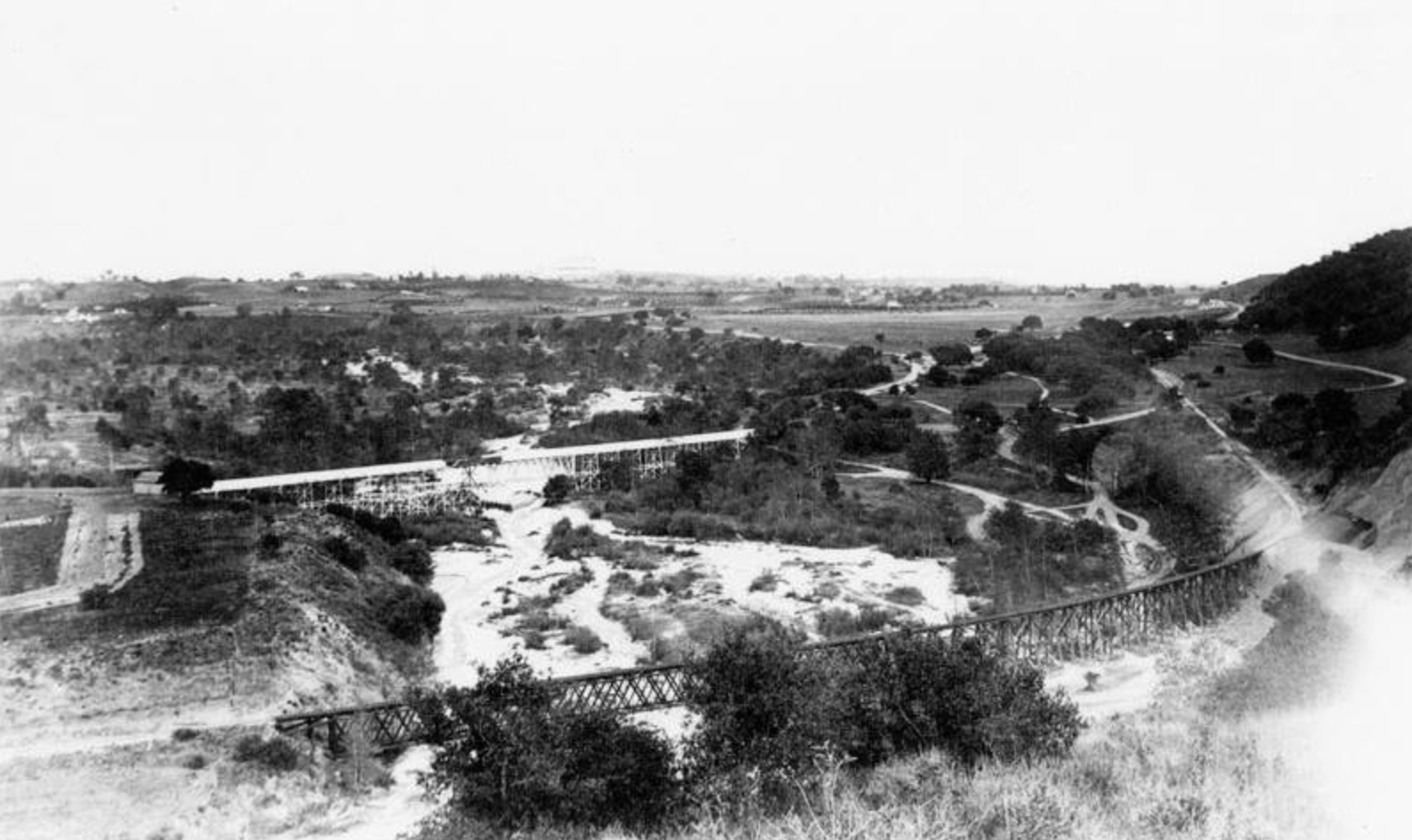
Arroyo Seco, CA 1913
This doctrine first went from how baptism should be performed to later outright denying the doctrine of the Trinity and the pre-existence of the Son of God. This doctrine traveled from Los Angeles south into Mexico through various missionaries and converts.
1914 - Romanita Carbajal de Valenzuela — The First Mexican Carrier of This Doctrine
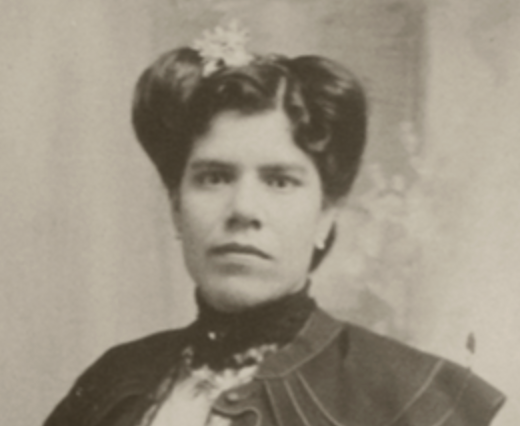
Romana Carbajal de Valenzuela
Shortly after Arroyo Seco, a Mexican woman living in Los Angeles named Romana Carbajal de Valenzuela embraced this new teaching.
She was connected to the Azusa Street Revival environment.
She returned to Aldama, Chihuahua in 1914.
She baptized about 12 family members “in the name of Jesus.”
This became the nucleus of the first Mexican Apostolic / Jesus-Name movement, which later formed IAFCJ (Iglesia Apostolica de la Fe en Cristo Jesús)
Romanita introduced the Pentecostal ecstasy, visions, dreams, prophetic messages, and “apostolic restoration” ideas. This is the first link between Arroyo Seco and LLDM.
1914-1916 - Agapito Soto — Romanita’s Disciple
One of Romanita’s early converts was Agapito Soto. He carried her message into La Laguna, Torreón, and San Pedro, Coahuila — the exact territory where the next figures emerge. Soto preserved:
Jesus-name baptism
Prophecy
Dreams and Visions
Holiness Rules
Rejection of the Trinity
Rejection of the preexistence of the person of the Son of God
His work formed the spiritual environment in which two controversial figures arose, Saulo & Silas the self-proclaimed prophets of Northern Mexico. We are going to now spend quite a bit of time on Saulo y Silas because these men had the biggest impact on the founder of LLDM; in effect, many of the doctrinal practices of LLDM today come directly from these two men.
1919 - 1924 - Saulo & Silas the “Prophets” of Northern Mexico
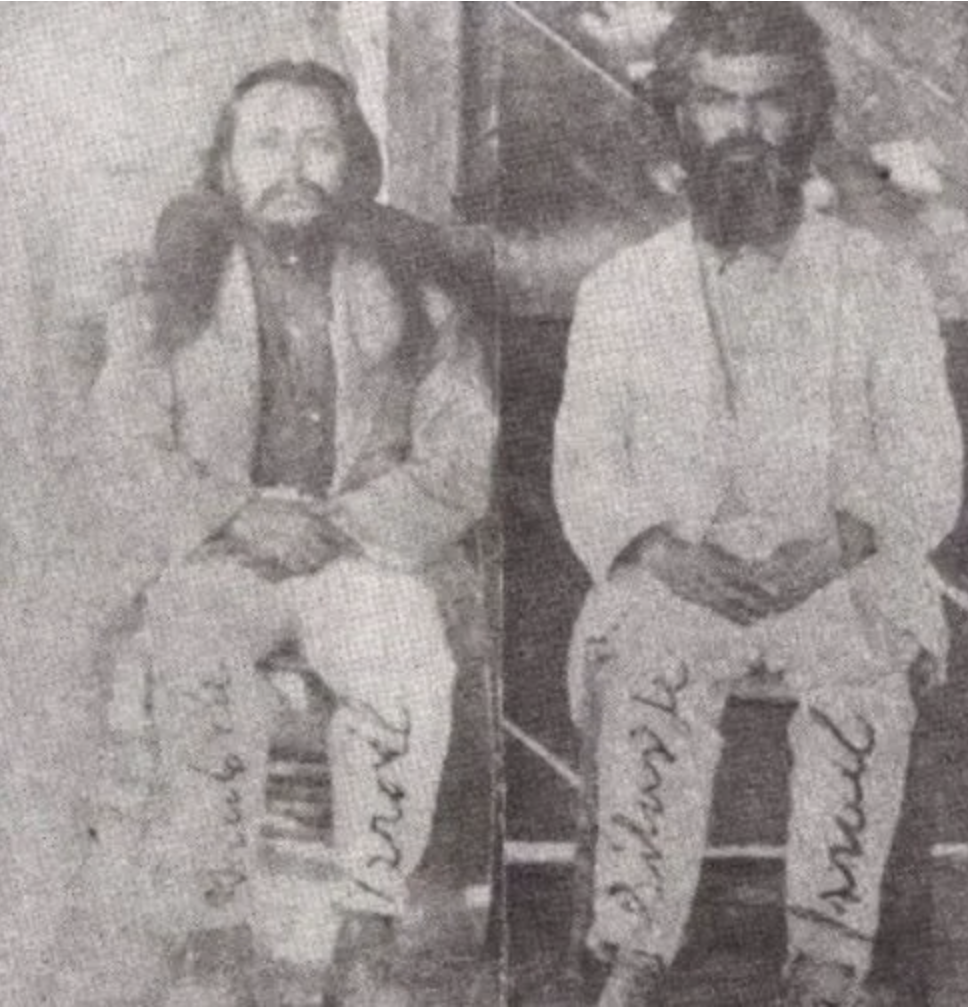
Antonio Muñoz and Francisco Flores
Out of Agapito’s territory came two self-proclaimed prophets, known as Saulo y Silas (real names Antonio Muñoz and Francisco Flores). Agapito Soto baptized these two individuals in the name of Jesus.
Saulo and Silas, like their counterparts, claimed direct revelations, and practiced vision-based leadership. However, through their revelations they were guided to impose strict holiness rules (barefoot preaching, long fasts, ascetic lifestyle) on those whole followed them. It was in this charismatic authority they became prophets over their congregations. In this, Saulo and Silas placed their visions above Scripture.
This is very important because this balance later shifted completely to the authoritarian figure first, Scripture second. Today per Naasón Joaquín García, in modern LLDM Scripture is like spoiled milk it is insufficeint compared to the revelation of the prophet. Theologically, the leader IS the Word of God on earth.
Their followers cried, trembled, and treated them as God’s chosen messengers. Saulo and Silas introduced a high-control prophetic culture that looks very similar to the emotional environment of LLDM today. The founder of LLDM, Eusebio “Aarón” Joaquín, was later baptized and renamed by Saulo. The point is that LLDM inherits directly from this prophetic, revelatory, authoritarian stream. We will expand further in more detail on some of the more relevant and interesting aspects pertaining to the ideology of Saulo and Silas, because it was here that many of the strange practices and ideologies of LLDM originated.
The Strange Practices, Control, Authoritarianism, and Abuse of Saulo & Silas
Saulo and Silas presented themselves as prophets, explicitly calling themselves “profetas” during the years 1924–1925 (documented in Hechos del Apóstol Aarón). Take another look at the photo above. Their physical appearance—long hair, beards, dirty clothing, and going barefoot—was itself intended to be prophetic. They cultivated an ascetic, wild, almost John-the-Baptist-like image: “Bearded, filthy men… preached… like John the Baptist.”
People admired their “impressive” physical appearance, and large families—including entire households—joined after being captivated by them. This high emotional devotion and collective conversion foreshadowed LLDM’s later culture of apostolic veneration.
Beyond appearance, they imposed radical lifestyle restrictions: renouncing previous religion, renouncing all material goods, being re-baptized, forbidding medicine, cosmetics, and jewelry, establishing isolated communities, and promoting a communal lifestyle in which everyone’s salaries were gathered and food was shared.
As their practices demonstrate, Saulo and Silas placed ultimate authority on their living word over Scripture. Their followers truly believed that the Spirit of God was manifesting Himself through them, and so they hung on every word uttered by the prophets. Aarón Joaquín, the founder of LLDM, later mimicked this same type of high-control sectarianism.
Their spiritual authority was grounded in visions, dreams, and prophecies. They effectively supplanted Scripture with their own revelations, claiming divine authority derived from personal prophecies, dreams, and visions rather than from the Bible. They repeatedly prefaced their messages with, “Thus says the Lord,” presenting their words as direct communication from Jehovah. Their followers received these declarations as unquestionable revelation—strikingly similar to the way LLDM treats apostolic speech today.
This point is crucial. Borrego himself later rejected them on these grounds, revealing the inherent tension between charismatic authoritarianism and an emerging organizational structure.
Living in communes under their authority
Saulo and Silas insisted that their followers live exclusively in isolated Christian communities under their direct authority. Like many cult leaders, they understood that a communal structure allows the leader to assume control over nearly every aspect of their followers’ lives. Women and other members were confined within small, tightly controlled community clusters where leadership regulated money, movement, and daily living. This exact structure would later serve as the prototype for LLDM’s “Hermosa Provincia” concept.
Their system was built on communal isolation and economic control. Everyone was expected to live within these exclusive communities, cut off from outside influence. Saulo and Silas controlled all money, donations, food distribution, and communal labor—a structure that ultimately collapsed when financial contributions diminished.
This model directly parallels LLDM’s later financial control through tithes, pledges, and communal assets. As their own movement began losing followers, the remaining members became financially dependent on Saulo and Silas themselves. Eventually, when the flow of resources dried up, both leaders fell into poverty and despair as the system of control they had built began to crumble.
Fear-Based Control
Fear-based control also played a central role in maintaining their authority. Antonio C. Nava, an apostolic Oneness Pentecostal, later recounted that Saulo and Silas prophesied that fire from heaven would fall upon anyone who dared to cut their sacred hair. The famous incident in which they threatened divine judgment was ultimately confronted by Nava himself. His intervention exposed the false nature of their prophecy and marked the beginning of the collapse of their claimed supernatural authority.
This pattern of invoking fear to protect leadership status finds a striking parallel in LLDM today, where it is taught that if someone speaks ill of the “Servant of God” (their apostle), divine judgment—such as a lightning bolt from heaven—could strike them down.
Alongside fear-based threats, miracle claims were used to bolster legitimacy. Accounts of dramatic healings—such as a man allegedly being miraculously restored after their prayer—reinforced the perception that they possessed divine power and authority.
Control over women specifically
Silas and Saulo traveled with women whom Saulo claimed represented biblical covenants. He referred to two women in particular: Marta, whom he called “the Beast,” symbolizing the old covenant, and Naomi, representing the new covenant—thus placing real women into allegorical, objectified theological roles.
Saulo openly lived with these two women. As it was later described, “Saul was living in adultery with two women, Naomi and Martha.” He justified these relationships through theological allegory, claiming he was like Abraham and that the two women paralleled Sarah and Hagar, symbolizing two covenant dispensations.
In this way, Scripture was not treated as the governing authority but as a tool to validate his own presuppositions. Their “living word” functioned above Scripture, yet they selectively used Scripture in an attempt to legitimize their sectarian beliefs. This pattern reveals an early form of sexual-spiritual manipulation—one that would later be mirrored in the documented abuses within LLDM under the Joaquín dynasty.
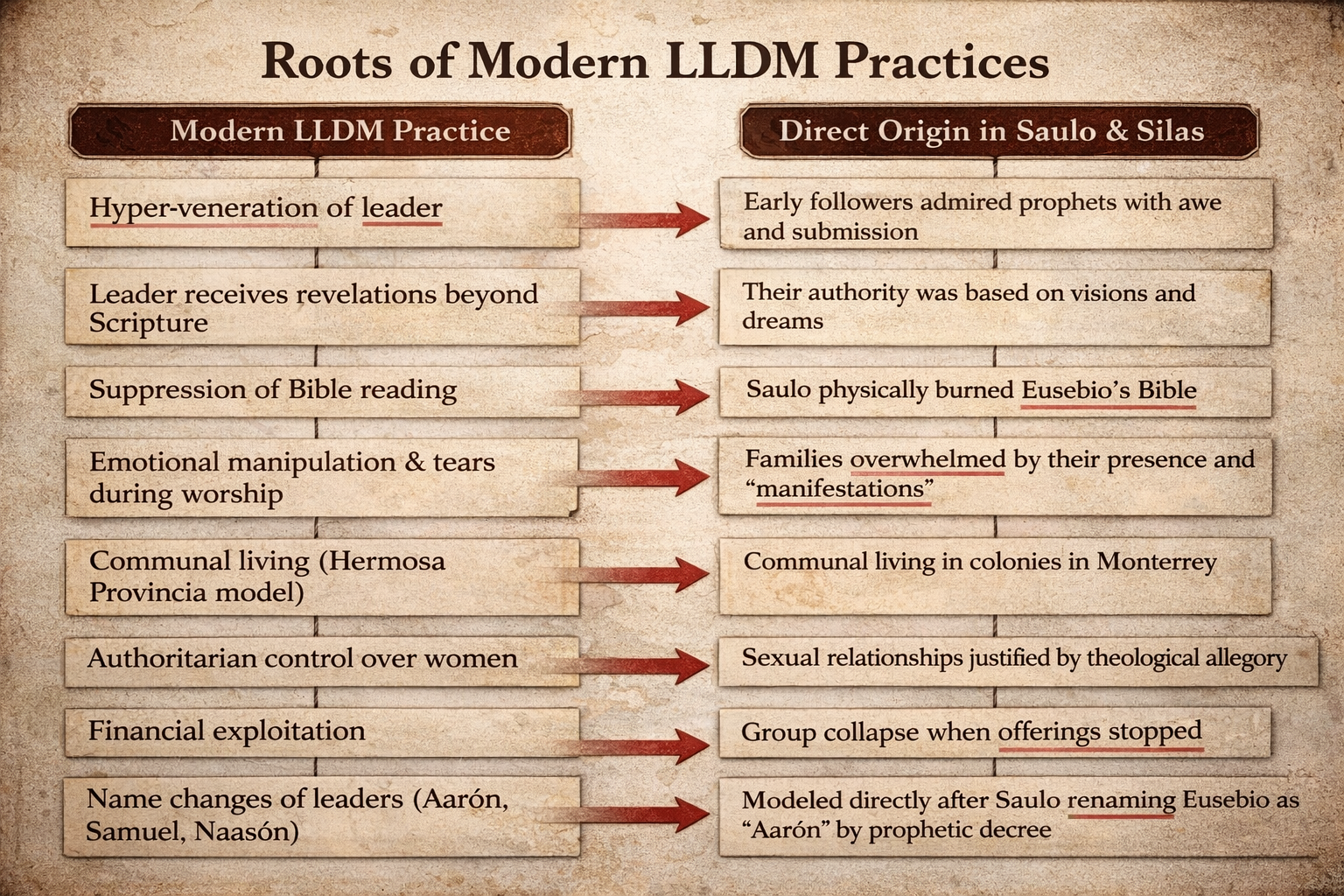
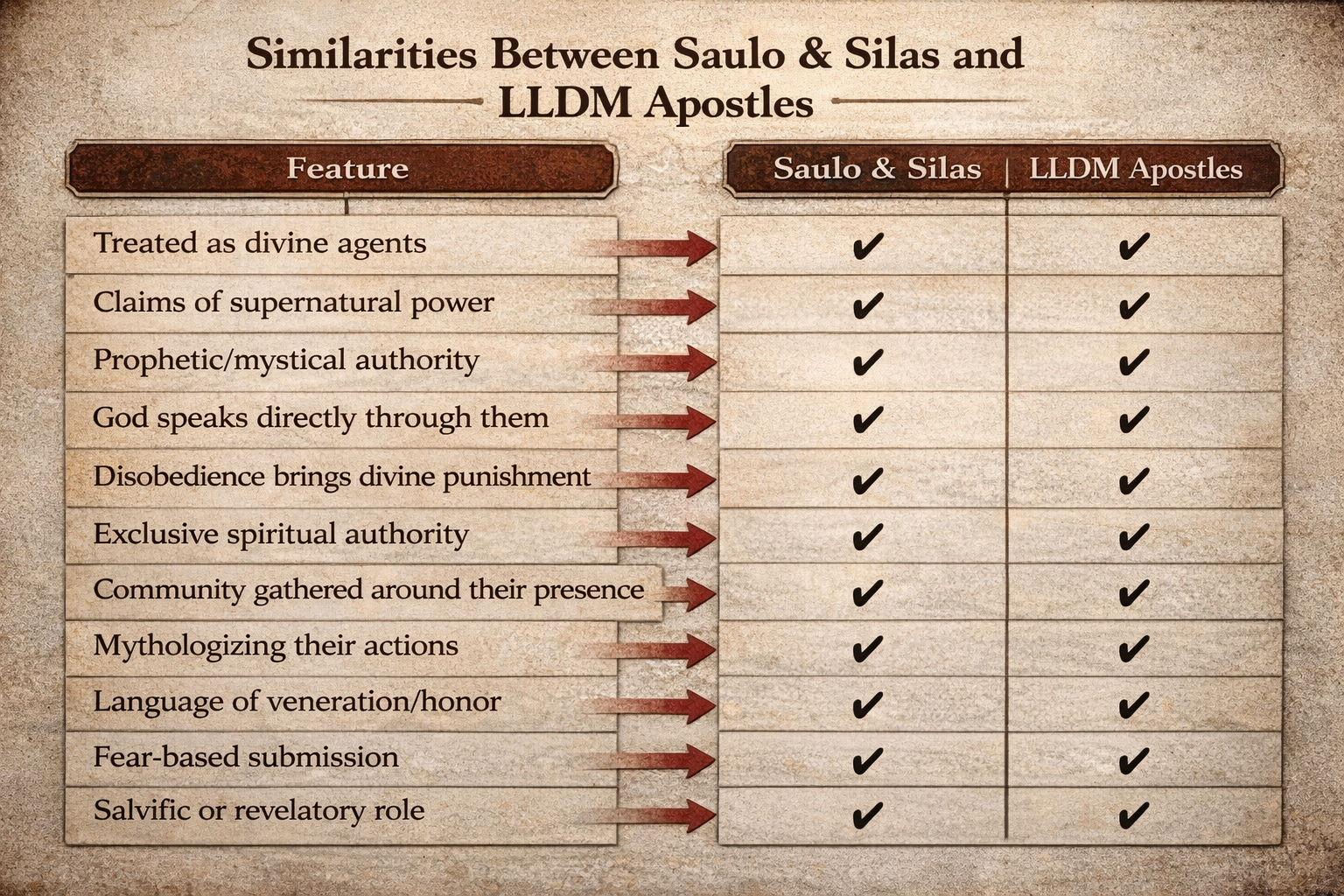
The two images above provide perfect examples of how LLDM was directly influenced by Saulo y Silas. However, we must continue with our examination of the true history of LLDM. Essentially, we have four streams that flow into the ocean of despondence we call LLDM. We have analyzed two: the Romanita/IAFCJ stream and the Saulo & Silas prophetic movement. Now we will examine the Joseph Stewart missionary line and, finally, the one who merged all three together—Francisco Borrego.
1924 - Joseph Stewart — The Foreign Missionary
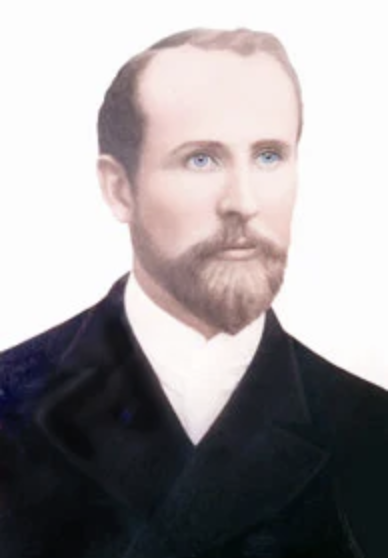
Joseph Stewart
In 1924, a Scottish-Irish missionary named Joseph Stewart arrived in Mexico and began organizing what would become the Iglesia Cristiana Espiritual (ICE), later known as IECE. Stewart worked alongside the same Northern Mexican networks influenced by Romanita, Agapito, and Saulo & Silas.
Stewart brought:
Restorationist ideology
Calvinist-styled “election” language [this election language was later something that was exploited and became a central piece for the LLDM doctrinal formation pertaining to their “apostles”]
Jesus-only baptism
anti-Trinitarian teachings
reinforced the notion that denies the preexistence of the person of the Son of God
Francisco Borrego — The Pastor Who United These Currents
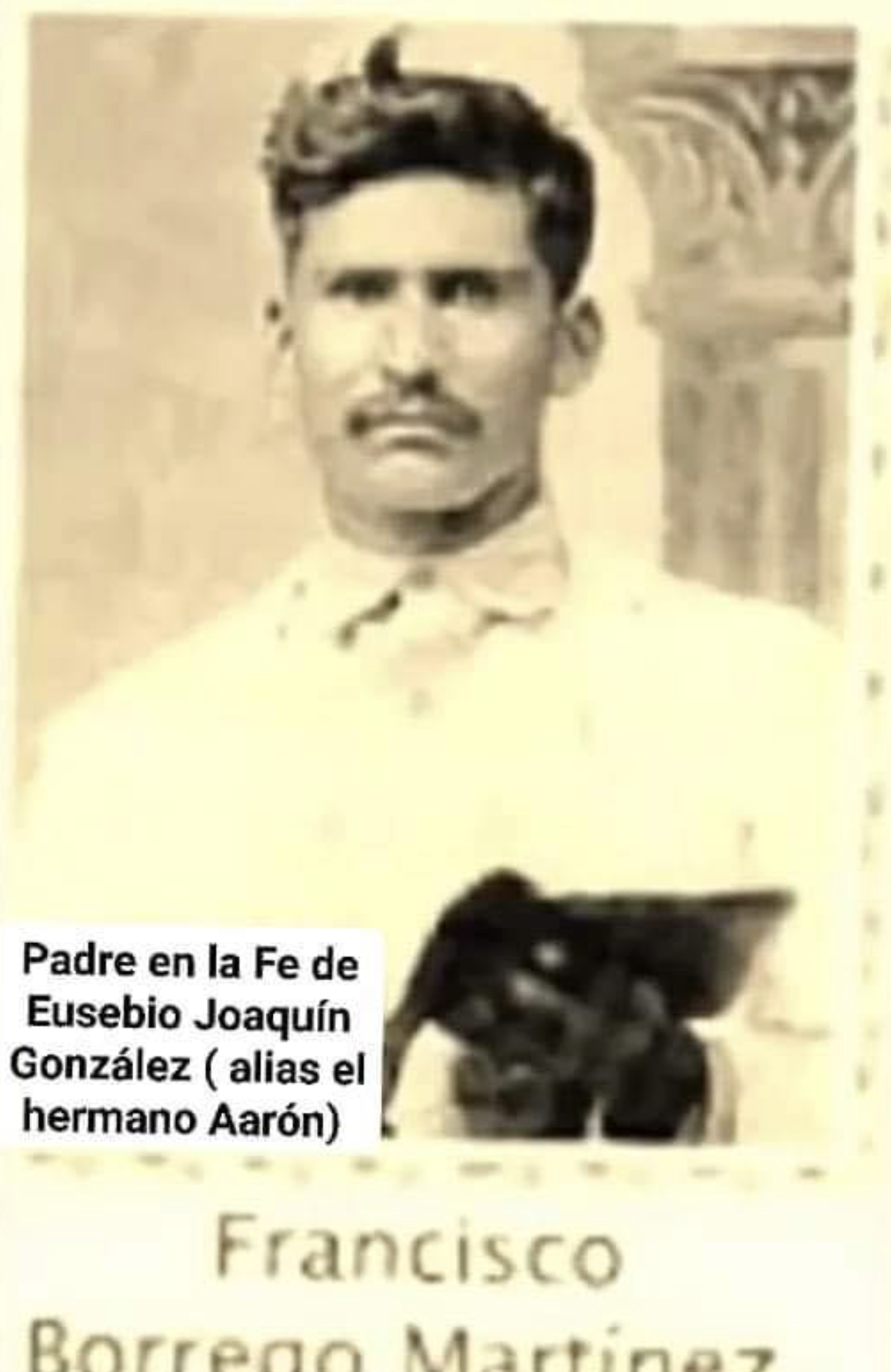
Borrego became the recognized leader of the Iglesia Cristiana Espiritual, the church to which Eusebio would later belong. This means that Aarón’s “church home” was already anti-Trinitarian, prophecy-driven, revelation-centered, restorationist, shaped by dreams and visions, hierarchical and authoritarian, and rejecting the preexistence of the person of the Son of God.
It also placed a high emphasis on authoritarian “elected” leadership—modern-day “prophets of God”—who were believed to have a special connection to God.
These “elected special prophets of God” came first, and Scripture second. The theological framework in which Aarón learned his theology was essentially this: the living prophet’s voice is above the written Word—revelation over Scripture.
1925 — Eusebio Joaquín Enters the Picture
In 1925, a young man named Eusebio Joaquín González entered the religious world of Saulo and Silas within the Iglesia Cristiana Espiritual (ICE), led by Francisco Borrego. He was baptized by Saulo using the Trinitarian formula, notably in the presence of Borrego himself. At this moment, he was given a new prophetic name: Aarón.
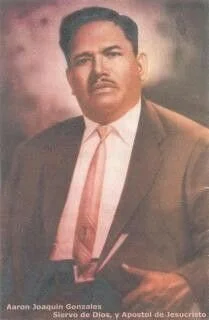
From the very beginning, his religious identity was framed through prophecy rather than biblical exposition. His authority was tied to visionary experience, and his early formation took place entirely inside a prophetic and authoritarian religious structure. Everything we know about his conversion period between 1925 and 1926 indicates that he learned the faith from Saulo and Silas—not through independent study of Scripture.
His first experience of Christianity was shaped by mystical prophetic culture, not careful biblical teaching. His baptism, discipleship, and theological framework came from leaders who did not operate within a sola Scriptura model. Instead, their system elevated the living prophet as the interpretive authority over Scripture. The prophet interpreted Scripture, corrected Scripture, and functioned as the necessary living voice that completed Scripture.
This structural model would later become foundational to La Luz del Mundo. Early hymnbooks within the movement even reflect this progression: Aarón is initially referred to as a “prophet,” not an “apostle.” The apostolic designation developed later. A similar pattern appears in the early years of Samuel Joaquín’s leadership, where he too was frequently referred to as “prophet” before the apostolic title was emphasized more prominently.
The Real Reason Eusebio Left Saulo and Silas
An Integrated Historical Explanation
La Luz del Mundo officially teaches that Eusebio Joaquín González separated from Saulo and Silas because God directly called him as His chosen Apostle in 1926. According to the movement’s later narrative, the break was immediate, divinely initiated, and rooted in a clear supernatural commission.
However, when we examine LLDM’s own official biography, Hechos del Apóstol Aarón, alongside independent historical reconstructions, a far more complex and troubling picture emerges.
The separation cannot be explained purely as a mystical calling. The historical record indicates that the rupture developed gradually under sustained relational, doctrinal, and moral strain.
Humiliation, Authoritarianism, and Coercive Control
Within the prophetic culture of Saulo and Silas, authority operated in highly centralized and authoritarian ways. Scripture was not the final arbiter of doctrine; the living prophet was. The prophet interpreted Scripture, corrected Scripture, and functioned as the necessary mediator of divine truth. Revelation consistently overruled biblical text.
Historical accounts describe sustained humiliation within this environment, as well as coercive control over daily life. Members were expected to submit not merely doctrinally but behaviorally and socially. Prophetic pronouncements extended into ordinary matters of conduct.
One striking example involves false supernatural threats—such as warnings that fire would fall from heaven if certain directives were not obeyed, including symbolic controls like prohibitions related to cutting one’s hair. These types of claims reinforced fear-based compliance and reinforced the prophets’ unquestionable authority.
In addition to doctrinal instability and coercive control, there were credible reports of open sexual immorality among the prophetic leadership. Independent historical sources further suggest that Elisa, Eusebio’s wife, may have been placed in moral danger, with indications that Saulo made inappropriate advances toward her. While details vary across accounts, the pattern consistently reflects a leadership culture marked by hypocrisy and moral compromise.
Temperamental and Theological Incompatibility
At the same time, Eusebio himself appears to have possessed a temperament that increasingly clashed with the chaotic leadership structure around him. Contemporary descriptions portray him as disciplined, orderly, serious about religious devotion, and growing in influence among other members.
As he matured within the movement, the gap between his developing convictions and the manipulative structure of Saulo and Silas widened. What began as submission under prophetic authority appears to have evolved into doctrinal conflict and moral revulsion.
His growing emphasis on order, seriousness, and structured authority would later become hallmarks of what developed into La Luz del Mundo. But at this earlier stage, those traits were fundamentally incompatible with the instability and hypocrisy he was witnessing.
Psychological Pressure and the Breaking Point
What LLDM later rebranded as a purely divine rupture was, historically, the culmination of accumulated pressures. These included psychological strain under authoritarian control, exposure to moral corruption, suppression of Scripture in favor of unchecked prophetic revelation, and a deepening conviction that he could no longer recognize the legitimacy of the leaders above him.
The break, therefore, was not a sudden heavenly interruption detached from context. It emerged from sustained humiliation, doctrinal instability, coercive authority, and moral crisis. The separation reflected not merely mystical calling but human conflict—conflict over power, doctrine, legitimacy, and personal integrity.
By the time Eusebio separated, the rupture had been building for years. The later apostolic narrative streamlined this history into a single divine commissioning moment. But the historical record suggests something far more layered: a man shaped by prophetic authoritarianism who ultimately rejected the leaders above him—not by abandoning the prophetic-authoritarian model, but by relocating it to himself.
1930–1937 — Conflict With Borrego: Dreams, Revelations, and Authority
As Eusebio began preaching more independently during the 1930s, tensions within ICE intensified. He began claiming dreams that overrode established doctrine and introduced new practices grounded in visionary experiences. Among these developments were barefoot preaching (descalzamiento), rebaptizing individuals based on his revelations, and implementing doctrinal shifts tied to his private spiritual experiences.
Francisco Borrego attempted to correct him, but Eusebio resisted these corrections. What was unfolding was not merely a personality conflict; it was a dispute over authority. Would doctrine be governed by Scripture and communal accountability, or by the direct revelation of a single prophetic figure?
Ultimately, Eusebio broke away and claimed a restorationist calling. In 1937, he was formally excommunicated. This marks the historical moment in which La Luz del Mundo effectively comes into existence. The separation did not occur because of a universally recognized divine commission but in the context of doctrinal conflict, prophetic authoritarianism, moral concerns, and ecclesiastical discipline.
A crucial historical question arises: when was Eusebio first publicly recognized as an apostle? The earliest historically documented and publicly acknowledged use of the apostolic title appears on July 18, 1943. Later institutional narratives would retroactively place his apostleship in 1926, effectively relocating the divine commissioning to the beginning of his ministry. This adjustment significantly reshaped the origin story of the movement, presenting the apostleship as foundational rather than developmental.